

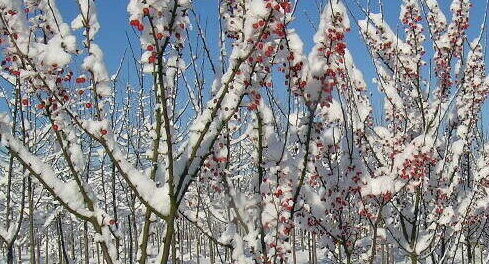
Proper tree care is essential for long-term health and strong establishment. Our methods cover best practices for planting, watering, mulching, and maintaining urban-tolerant trees—helping ensure your trees thrive in even the most challenging environments.
Winter Care for Street Trees: Protecting Your Urban Canopy
Winter can be one of the most challenging seasons for street trees, especially in urban environments where harsh conditions, road salt, and compacted soils take a toll. At Urban Forest Nursery, we work closely with landscape professionals and municipalities to ensure street trees not only survive the winter — but thrive in the long term.
Proper winter care helps maintain tree health, reduce damage, and prepare trees for vigorous growth in spring.
Common Winter Challenges for Street Trees
Street trees face unique stressors during the cold season:
• Salt and de-icing chemicals — Can damage roots and foliage.
• Compacted soil — Limits oxygen and water availability.
• Freeze-thaw cycles — Cause bark splitting or root damage.
• Wind and desiccation — Can dry out branches, buds, and needles.
• Heavy snow and ice — Adds weight that can break limbs.
Understanding these risks is the first step in protecting your urban canopy.
Winter Care Practices for Street Trees
1. Mulching
Apply 2–4 inches of organic mulch around the base of the tree, extending out to the drip line if possible. Mulch helps:
• Insulate roots from extreme temperatures
• Retain soil moisture
• Reduce frost heaving
Keep mulch a few inches away from the trunk to prevent rot or rodent damage.
2. Pruning and Limb Maintenance
Winter is an ideal time to prune dormant trees:
• Remove dead, diseased, or weak branches
• Correct structural defects before snow and ice loads become problematic
• Avoid heavy pruning in late fall, which can stimulate tender growth
3. Protecting Trunks
Young street trees are vulnerable to sunscald, frost cracks, and rodent damage. Protect trunks with:
• Tree wraps or guards
• Wire cages or biodegradable tree shelters
Remove wraps in early spring to allow normal bark growth.
4. Watering
Even in winter, street trees need water if the soil is dry and unfrozen. A slow, deep watering during warm periods can prevent dehydration. Evergreens are especially vulnerable to winter desiccation.
5. De-Icing Considerations
Avoid placing road salt or chemical de-icers near trees whenever possible. If exposure is unavoidable, rinse trees with water once the snow melts or apply a protective layer of mulch around roots.
6. Snow and Ice Management
Gently remove heavy snow from branches using a broom, sweeping upward to avoid breaking limbs. Do not attempt to shake ice off branches, as this can cause significant damage.
Why Winter Care Matters
Street trees are a long-term investment in community health and aesthetics. Proper winter care:
• Reduces limb breakage and storm damage
• Minimizes disease and pest issues in spring
• Helps maintain a strong, healthy root system
• Ensures trees resume active growth quickly when temperatures rise
By following these best practices, urban trees are better equipped to survive harsh winters and continue providing shade, beauty, and environmental benefits for decades.