

At Urban Forest Nursery, we regularly evaluate trees for long-term performance, adaptability, and suitability in today’s urban environments. Through our Tree Variety Spotlight series, we share decades of observations to help municipalities, landscape professionals, and tree enthusiasts make informed planting decisions.
Our latest spotlight features Osage Orange (Maclura pomifera), with a closer look at the improved thornless, fruitless cultivars ‘White Shield,’ ‘Wichita,’ and ‘Park.’ While the traditional Osage Orange has long been known for its formidable thorns and large fruit, these modern selections reveal an entirely different side of the species—one that deserves renewed consideration as a street and landscape tree.
A Tree with an Unexpected Reputation
For many arborists, Osage Orange brings back memories of impenetrable hedgerows, incredibly dense wood, and enough thorns to discourage almost anyone from planting one near a sidewalk. Jim Barborinas shares those same experiences from his early years working in Illinois, where the species earned a reputation as one of the toughest trees to remove.
Those same characteristics, however, also hint at the tree’s greatest strengths. Exceptionally strong wood, outstanding drought tolerance, and remarkable resilience make Osage Orange one of North America’s toughest native trees.
Modern Cultivars Change the Story
The introduction of thornless, seedless cultivars such as ‘White Shield,’ ‘Wichita,’ and ‘Park’ transformed the conversation.
Without the heavy fruit and formidable thorns of the species, these selections retain the qualities that urban foresters appreciate most:
- Outstanding wood strength
- Excellent drought tolerance
- Few significant insect or disease problems
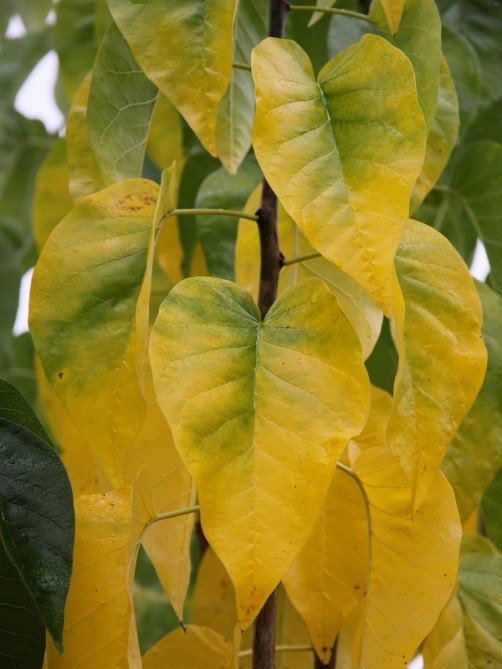
- Attractive yellow fall color
- Reliable performance in challenging urban sites
Growing approximately 30 feet tall and wide, these cultivars develop an attractive rounded to vase-shaped canopy that fits comfortably into many streetscapes and municipal landscapes.
Built for Long-Term Urban Performance
Urban forestry increasingly demands trees that can withstand difficult soils, reflected heat, limited rooting space, and changing weather patterns. While Osage Orange may never be considered flashy, its dependability, durability, and structural strength make it a practical choice for many planting situations.
As Jim notes throughout the Tree Variety Spotlight, these improved cultivars deserve a place on today’s preferred street tree lists.
For a deeper look at this often-overlooked species—including Jim’s personal experiences, photographs, and practical observations—visit our Tree Variety Spotlight on Osage Orange, where you’ll find the complete article and learn why these thornless cultivars may be one of urban forestry’s best-kept secrets.