

Maclura pomifera — ‘White Shield,’ ‘Wichita,’ and ‘Park’

It was around 1972 at Southern Illinois University, during an outdoor dendrology quiz, that I correctly identified Osage orange, Maclura pomifera—though only after stumbling over one of its softball-sized fruits lying on the ground.
I became far more familiar with this tree during summer field work in central Illinois, clearing hedgerows in a large park. Chainsaws would nearly burn up trying to cut through one of the hardest, densest woods in the United States unless the chain was continually sharpened. Cutting and clearing limbs was frustratingly slow because of the long thorns on every branch, and unlike many other trees, there was no snapping limbs by hand. Every branch had to be cut to make way. They were called hedgerow trees for a reason.
That remarkable wood density made Osage orange one of the most highly valued trees for Native Americans and early pioneers—first for weapons and tools, later for fence posts and railroad ties. Cut posts could endure 30 years or more in ground contact without preservative. Burn it in a wood stove, and you might even melt the grates—it burns that hot.
As an arborist, I respected and admired this tree for years, while admitting there was no way it could ever be considered a good city tree—with its long, lethal thorns and fruit as big and solid as cannonballs.
Then, years later, I read about a seedless, thornless Osage orange cultivar called ‘White Shield.’ Wow—what a find.
Over time, two more seedless, thornless cultivars emerged: ‘Wichita’ and ‘Park.’ The differences among them appear subtle. ‘White Shield’ is reportedly the most thornless, while ‘Wichita’ may grow slightly taller, perhaps reaching 40 feet.
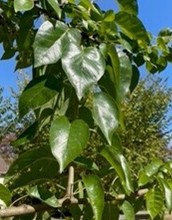
The leaves of Osage orange are simple, glossy, and range from lime to dark green. They are arranged alternately, though they may cluster on lateral spur shoots. When broken, the petiole produces a milky sap. Leaf margins are smooth, sometimes gently wavy.
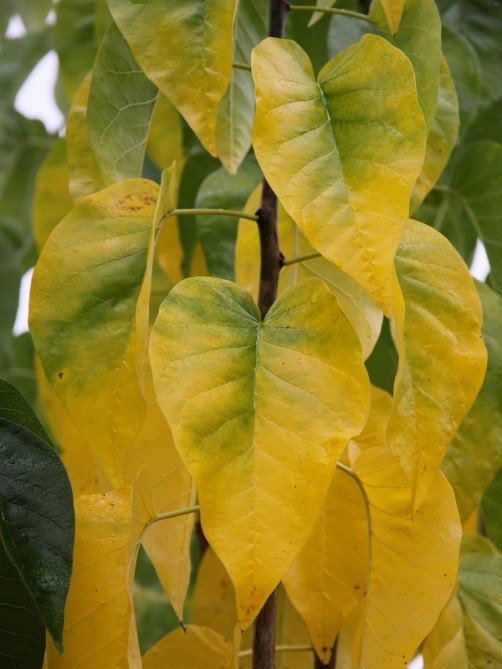
In fall, the foliage turns a clean, attractive yellow.
None of these cultivars is likely to maintain a dominant central leader with age, but they do develop a lovely rounded or vase-shaped canopy roughly 30 feet tall and wide. Think of this tree as a workhorse of urban forestry—tough as nails, resilient in storms, and largely free of serious insect or disease concerns, at least in my experience. It may never be considered flashy, but it delivers the dependable benefits we expect from an urban tree with very few headaches.
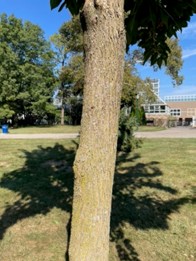
As mentioned, the wood is exceptionally hard, which makes its limbs well suited for urban settings—not easily broken by traffic, weather, or people. Pruning may challenge both your shears and your hands, so keep your equipment sharp. Osage orange appears to transplant readily and grow well in most well-drained soils. It loves full sun, tolerates drought, and should serve reliably for years.
Add these cultivars to your preferred street tree list.
Please let me know any experiences you have had with this tree.
CLICK HERE FOR MORE TREE PROFILES
Jim Barborinas
Owner of Urban Forest Nursery, Inc.
ISA Certified Arborist #PN-135
ASCA Registered Consulting Arborist #356
15119 McLean Rd.
Mount Vernon, WA 98273
jim@urbanforestnursery.com
Still wondering if Osage orange is the right fit for your space or street planting?
Here are some common questions we hear from people considering this tree:
The traditional seedling form of Osage orange is not usually considered a good street tree because of its large fruit and sharp thorns. However, newer seedless and largely thornless cultivars such as ‘White Shield,’ ‘Wichita,’ and ‘Park’ make this species much more practical for urban planting.
These cultivars were selected because they are seedless and largely thornless, removing the two biggest problems associated with Osage orange in urban settings. ‘White Shield’ is often noted as the most thornless, while ‘Wichita’ may grow slightly taller.
These cultivars typically develop into rounded or vase-shaped trees around 30 feet tall and wide, although ‘Wichita’ may reach closer to 40 feet in some conditions.
Yes. Osage orange performs well in full sun, tolerates drought, and grows in most well-drained soils, making it a durable choice for difficult urban sites.
Yes. The glossy green leaves turn a clean yellow in fall, adding seasonal interest even though the tree is best known for its strength and durability.