

Starlight® Dogwood, Cornus kousa x nuttallii ‘KN4-43’
Venus® Dogwood, Cornus kousa x nuttallii ‘KN30-8’
Eddie’s White Wonder, Cornus ’Eddie’s White Wonder’
Snow Tower® Dogwood, Cornus kousa var. chinensis ‘Snow Tower®’
Scarlet Fire®, Cornus kousa ‘Rutpink’
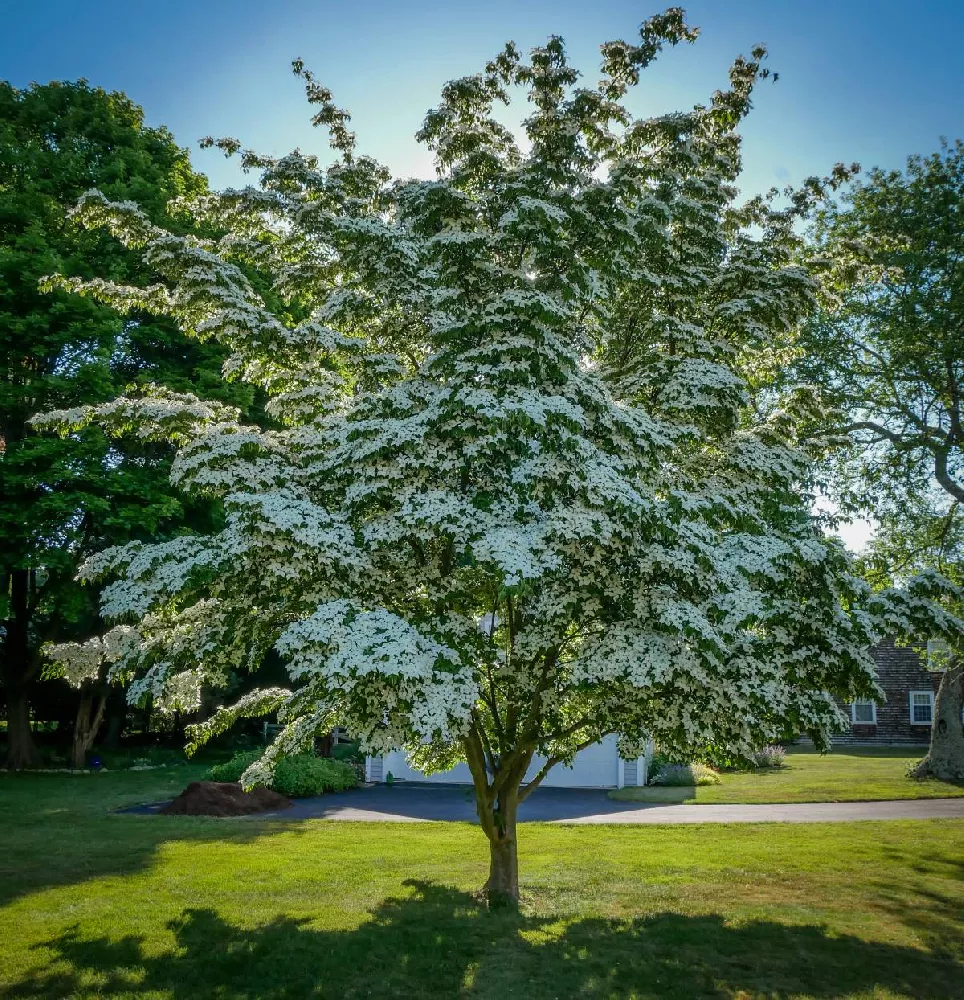
There is likely no other small tree in the landscape that stands out in the spring more than the flowering dogwood. Fortunately, many cultivars are available. The spectacular splash of white, pink or red in the spring will pull your attention away from everything else, whether in a garden, boulevard, front yard, or park. The flowers are somewhat small and similar among all the dogwoods but it’s the four large bracts, not technically the flower that everyone notices. These four bracts, (six on Cornus nuttallii), open up outside the flower, framing it, that make the difference. It is the bracts that vary in size, shape, and color that help differentiate the varieties. For simplicity though, let’s include the bracts in their description with the flowers.
Dogwood trees are typically short and round, 15 to 25 feet in height, except for at least one very narrow variety listed below. They have four seasons of interest: a month of showy flowers in the spring, a dense summer canopy, bright foliage and fruit in the fall, and unique twig and branch structure in the winter
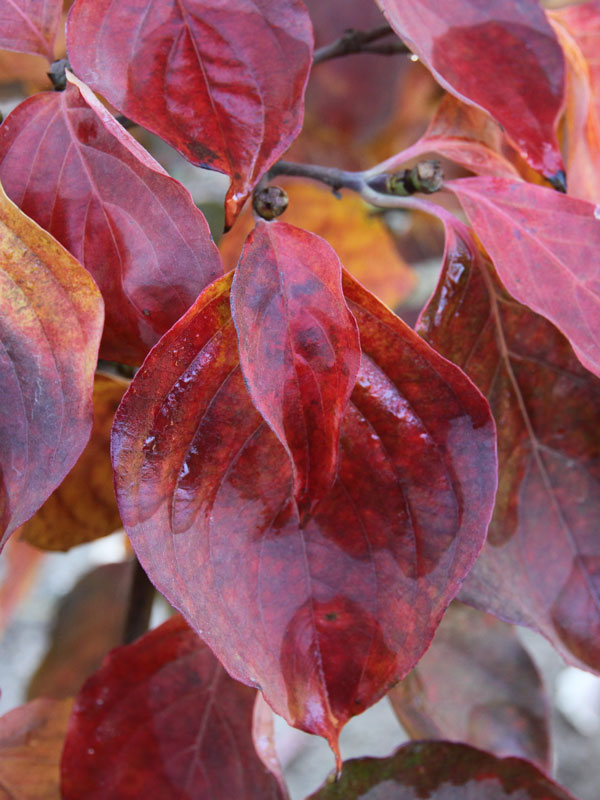
Courtesy-Schmidt Nursery
Flowering dogwoods in general tend to be slow to establish but somewhat easy to transplant. Some of the cultivars are susceptible to powdery mildew and sensitive to adverse soil and environmental conditions like road salt and pollution, but once established, they perform well. These trees prefer well drained organic soils, especially in a protected and partially shaded location.
Because of their spectacular flowers, bright showy red fall leaf color and preference of protection and some shade, they are especially useful when placed strategically at forest and garden edges. Here they show off against a backdrop of darker stems and green foliage during changing seasons.
There are too many cultivars to name here. Those most popular and attractive from my experience are:
Starlight® Dogwood, Cornus kousa x nuttallii ‘KN4-43’, a hybrid cross between the Japanese Kousa and the Pacific Dogwood at 30 feet tall and 20 feet wide with a beautiful white flower. Noted to be immune to powdery mildew and anthracnose. An occasional leaf on every tree will show a unique and notable splash of yellow or white, unlike any other variety I have seen.
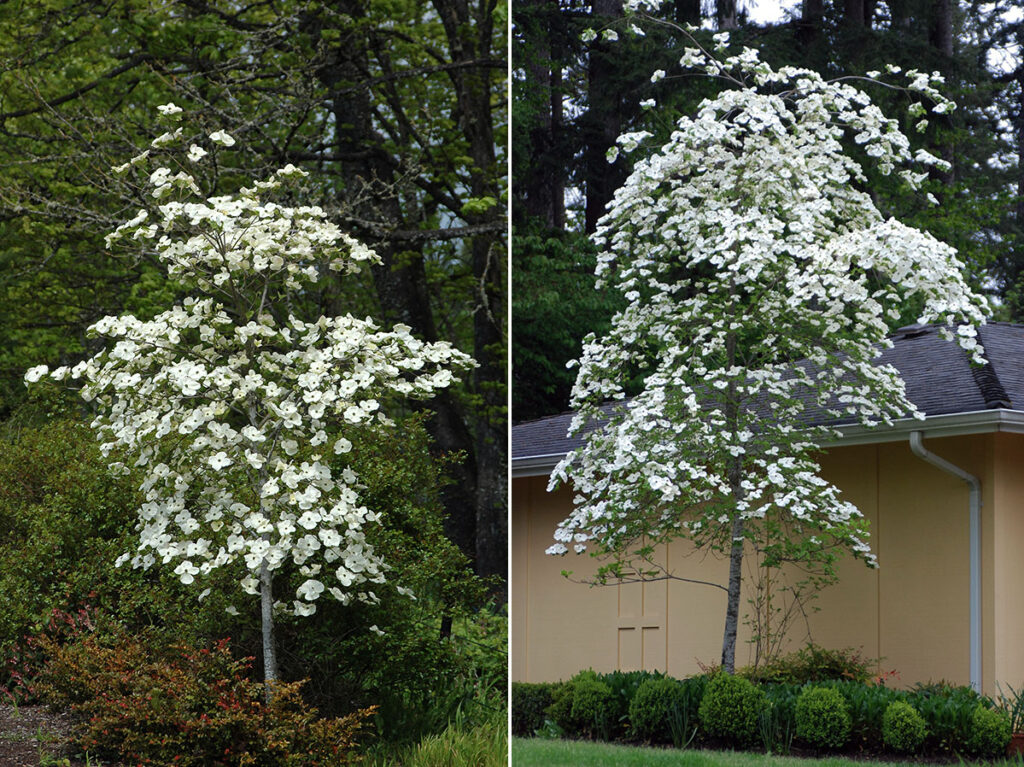
Courtesy Oregon State University
Venus® Dogwood, Cornus kousa x nuttallii ‘KN30-8’, slightly smaller at 25 feet tall and 20 feet wide, with huge flowers, sometimes up to 6 to 8 white bracts, and fruit larger than the native dogwood, edible and relatively sparse, and a slightly weeping form if not accidently pruned out. The Venus is said to be resistant but not immune to borers and fungal diseases.
- Eddie’s White Wonder, Cornus ’Eddie’s White Wonder’, is an unusual hybrid cross between our native Western Dogwood and Cornus Florida, potentially taller to 30 feet but not so wide only to about 15 feet. This tree shows a narrow frame like our native dogwood with irregular branching and may require more sun and space to keep it happy and healthy. It is an attractive white flowering dogwood substitute for our native dogwood because of its increased resistance to anthracnose and common foliar diseases.
Snow Tower® Dogwood, Cornus kousa var. chinensis ‘Snow Tower®’ is the smallest and narrowest dogwood of any that I know of, at about 12 feet tall and 6 feet wide. Excellent for gardens and patios, or even a boulevard or street tree if high clearance is not an issue. Although small in stature, the flowers can be surprisingly large up to 7 inches across. This is likely one of the smallest flowering trees available.
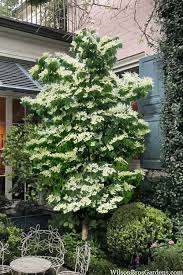
Snow Tower® Dogwood Tree.
Courtesy Wilson Bros. Gardens
Scarlet Fire®, Cornus kousa ‘Rutpink’ is in my opinion, a dramatic improvement over the Satomi pink varieties because of its better form, faster growth and late blooming, and especially the more striking pink fuchsia flower color. It appears light pink at first, then darkens to red over a long period of 6 to 8 weeks. This is a medium size tree, up to 25 feet tall and 20 feet wide. This tree is a real head turner in any location.
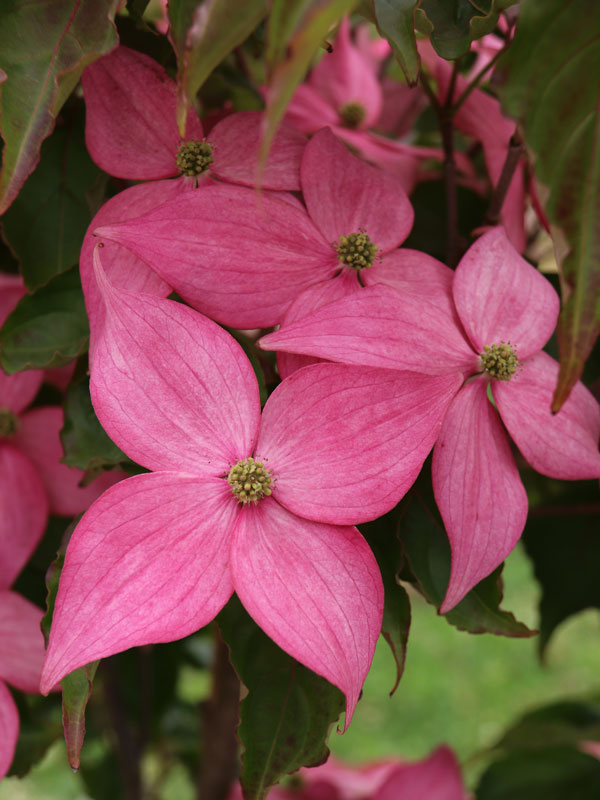
Courtesy Schmidt Nursery.
Check any of the great Dirr’s tree books or some of your favorite tree nurseries for more cultivars. His latest large illustrated book is “The Tree Book, Superior Selections for Landscape, Streetscapes, and Gardens”, Dirr & Warren.
Let me know your favorite dogwood or any concerns that you have for planting them any time.
CLICK HERE FOR MORE TREE PROFILES
Jim Barborinas
Owner of Urban Forest Nursery, Inc.
ISA Certified Arborist #0135
ASCA Registered Consulting Arborist #356
15119 McLean Rd.
Mount Vernon, WA 98273
jim@urbanforestnursery.com
Still curious how Cornus dogwoods and their cultivars perform in landscapes or urban planting?
Here are some common questions we hear from people considering these trees:
Flowering dogwoods are among the most eye‑catching small trees in the landscape thanks to their large, colorful bracts in spring, rich seasonal foliage, and often attractive fruit. The bracts — which are what most people think of as flowers — vary in size, shape, and color among cultivars, from classic white to striking pink tones. Many selections also offer interesting form and winter structure that adds year‑round appeal.
Most Cornus species and cultivars are small to medium in stature, typically ranging from about 12 feet tall and 6 feet wide for compact selections to around 30 feet tall and 20 feet wide for larger varieties. Overall growth rate tends to be moderate — dogwoods are not vigorous growers, establishing slowly but steadily once planted.
Yes — many dogwoods are excellent in boulevards, front yards, and urban gardens where a smaller, ornamental tree is desired. Narrower cultivars fit well in tighter spaces, while broader forms make wonderful focal specimens in larger planting strips. They tend to prefer locations with some protection from harsh conditions and partial shade, but many perform well in urban landscapes when sited thoughtfully.
Absolutely — these dogwoods deliver a showy spring bloom with large bracts, lush summer foliage, and attractive fruit and leaf color in fall. Some cultivars also retain interest into winter through their branching structure and bark texture, offering multiple seasons of landscape appeal.
Flowering dogwoods generally prefer well‑drained, organic soils and a partially protected site that avoids harsh afternoon sun or strong winds. They can be slow to establish and may be sensitive to disease pressures in adverse environments, so choosing disease‑resistant cultivars and providing good site preparation will support long‑term success.