

Malus ‘Adirondack’

In these days of small planting strips, low overhead wires, sign visibility, and narrow spaces, there are few trees that meet the true small tree category. The Adirondack Flowering Crab tree is one that does. For nurseries, this flowering crabapple tree is frustratingly slow to grow. It takes at least twice as long in production to get to 2″ caliper compared to most other crabs. But for those locations where you want a tree to maintain a limited height and width, this ornamental crapple is the ticket.
The form is narrow and short, maybe getting to 12′ tall by 6′ wide, taking many years to get to that size. The leaves are small, dark green, and sharply toothed. They grow and are held close to the branch they are attached to. The flowers begin as fat red buds, then open to a waxy wide white flower of 1.75″ to 2.25″ wide, completely covering the tree. This year they began flowering in early May, making it a standout spring flowering crabapple. The fruit is red to orange, approximately .5″ diameter and holds on until December. This is not a dense or twiggy tree unless continually pruned, and would probably even train well on a flat wall or fence if desirable.
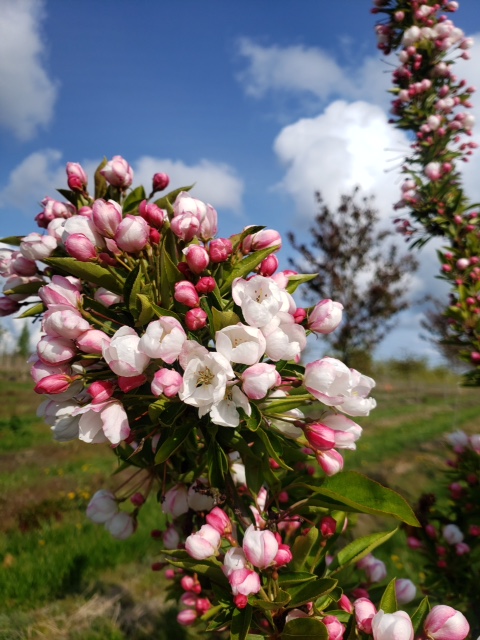
It appears that this tree is easy to transplant. Additionally, all of the literature describes this Adirondack crabapple tree as highly disease resistant, and we have never seen any insect problems with the tree. I would not recommend this tree as a street tree, as it would never develop much of a crown. However, it would be an excellent choice for any location requiring a short, but narrow, slow growing ornamental crabapple with minimal maintenance.
Their availability may be limited, and they may cost a bit more than other varieties because of this slow production time. Let me know if you have any experience with the Adirondack Flowering Crab.
CLICK HERE FOR MORE TREE PROFILES
Jim Barborinas
Owner of Urban Forest Nursery, Inc.
ISA Certified Arborist #0135
ASCA Registered Consulting Arborist #356
15119 McLean Rd.
Mount Vernon, WA 98273
jim@urbanforestnursery.com

This tree has been selected by Great Plant Picks for outstanding performance in Pacific Northwest landscapes.
Curious how Adirondack Flowering Crab performs in small spaces and landscapes?
Here are some common questions people ask about this tree:
Adirondack Flowering Crab stays compact, typically reaching about 12–18 feet tall with a 6–10 foot spread. It grows slowly compared with many other crabapples, taking time to reach full size but rewarding patience with its form and blooms.
This crabapple has a narrow, upright habit ideal for smaller spaces. In spring it bursts with abundant, showy white flowers, and small red‑orange fruit may persist into winter, adding seasonal interest.
Yes — its modest size and upright form make it great for front yards, patios, narrow strips, or other tight sites. It won’t create a broad canopy, so it works well near buildings or walkways with limited space.
Absolutely — fragrant white flowers cover the tree in spring, followed by small red‑orange fruit through fall and into winter, attracting birds and adding color. Foliage stays dark green through summer, providing a nice backdrop to blooms and fruit.
Plant in full sun for best flowering and fruit set. It’s generally disease resistant and easy to transplant. Well-drained soil and regular moisture while establishing will help it get settled, after which it’s low-maintenance and adds charm without much fuss.